
Access to the children

So first thing you have to keep in mind when it comes to custody and access is that the right to Access your children only comes into play when parents separate or never stayed together at all,

When parents separate one walks away with custody of the children whilst the other keeps the title of guardian. The one who does not stay with the child has a right to access the children from time to time so that they create or maintain a parent-child bond. However, it happens that the parent who stays with the kid may deny the other a chance to bond with the child for several reasons that are sometimes unjustifiable.


When this happens, the law offers a remedy to such problems and that remedy is the right to Access. This is in very simple terms your right as a non-custodial parent to be visited by your children and temporarily stay with them so that a bond is created or maintained. It is there so that the effects of separation do not negatively impact the normal psychological lives of children. Recognizing this right and offering a court procedure to assert this right means that the law is aware of the fact that children need both a father and mother in their lives.

So when parents do not agree on how often the other parent should have access to the children, it is up to the parent who is not happy with the prevailing arrangement to go to Court by making a Court Application wherein they state that they are the father or the mother of the children and that they are separated with the other parent. There is nothing else you have to prove for the Court to give you reasonable access to your children.

Reasonable Access can vary on a situation-by-situation basis however, normally the Court gives a parent the right to have access to their children on alternating weekends and school holidays. The order that the Court issues out, will be expressly stating how long the intermittent periods of access will be and where the children are to be fetched. All this can be done at any Magistrates Court in Zimbabwe.

To enforce this right you need to be aware of the address upon which the other parent stays to serve your Court Application. It is quite a simple and convenient procedure the law has to offer. If after the issuance of the order the other parent still blocks the other from seeing the children, one can report to the police with a copy of the order. The Police can help in enforcing a Court Order.


The author of this snippet is Simon Flemming Mutandi, a lawyer who writes in his personal capacity. The purpose of these pieces is to share insights into the law. The language and content is simplified to give the reader a digest of complex legal issues. For more information contact 0783475020 or email simonflemming1@gmail.com.


Health and Safety at Work

Making sure the workplace is safe, the rights and obligations of employer & employee.

Every worker is entitled to a safe and healthy place of work, the employers must provide a healthy and safe working environment. If an employer fails to do so and an injury results, he can be sued for the damage caused to a worker or visitors who come to the premises.

What employers are supposed to do to avoid injuries at work?

  • To provide safe machinery and equipment that does not pose an unnecessary risk of injury to the user. The machinery must work in its normal working condition such that it does not injure the users.
  • To provide safe working environments in terms of ventilation, cooling, or heating as is appropriate,
  • To provide protective clothing
  • To provide systems of work that are safe and humane,
  • To train the workers and make sure they have undergone medical examinations to make sure they are fit for the job.
All of this has to be done at the employer’s expense. The worker must not be asked to contribute money to provide any of the things listed above.

What employees must do to ensure that they are safe and compensated for any injuries sustained during work?
  • Workers must take reasonable steps to avoid injury to themselves or others. In other words, workers must not be reckless, otherwise, they will fail to get full compensation for their injuries.
  • Not to interfere with the proper functioning of machinery or to misuse machinery
  • To listen to the instructions set by the employer on how to work and use machinery at the workplace.
  • A worker must report to the police or NSSA or its trade union any failure by the employer to provide a safe working environment.

What happens when there is an injury ?

In the event of injury or death caused at work, you or your relatives have the right to claim compensation from NSSA for the medical expenses, funeral expenses, or future expenses caused by the accident at work.

You only need to prove that you were a worker employed by someone or a certain company and that you got injured during your employment. And you must claim as soon as the date of the accident because the claim may expire and you will not get anything.


The author of this snippet is Simon Flemming Mutandi, a lawyer who writes in his personal capacity. The purpose of these pieces is to share insights into the law. The language and content is simplified to give the reader a digest of complex legal issues. For more information contact 0783475020 or email simonflemming1@gmail.com.

Insurance

Buying protection against the hazards of life and how to read and understand the Insurance Policy carefully.

Insurance is a legal contract made between you and an insurance company. The contract document is popularly known as an Insurance Policy. As soon as you receive it, you should read every line carefully. If it contains anything you object to or omits anything you want to have included, bring it to the company’s attention before signing it.

Most common clauses in insurance policies:

  • “Preamble” – this is the generalized introduction to the policy stating that an agreement has been reached between the company (the insurer) and you, (the insured).
  • “What is insured” – these will be clauses describing what exactly is insured and an express description of the eventualities insured against.
  • “Exceptions” – The policy document will have clauses relieving the insurance company from liability – the type of exception clauses vary according to the class of insurance. For example, in a fire insurance policy, the company can state that it will cover all losses caused by fire except for fires that are caused by lightning.
  • “Conditions” – these are the most important terms of the policy. If you do not comply with them, the insurance company can legally refuse to pay out the insurance. Conditions vary according to the type of insurance. For example, a motor insurance policy may insist on proper maintenance of the car. Fire insurance may insist on fire extinguishers being installed on the premises and have them serviced regularly.

Failure to do proper maintenance of the car may entitle the insurer to refuse to pay. The burden of proving a breach of a condition lies with the insurance company. So in the example above, the insurance company has to prove that you did not do proper maintenance of the car before they can refuse to pay out the insurance.

  • “Schedule”– usually includes the basic details that apply only to your policy: the policy number, your name and address, and other personal information, what is insured for how much, when the premiums are payable, the date the policy begins, and so forth.‎

Once an insurance policy is made, the terms cannot be changed without the consent of the company and yourself. The insurance company does not have the right to unilaterally vary the contract without notifying you.

  • “Assignment of the insurance policy”– insurance policies may have clauses providing that the insurance can be passed on to someone else. The purpose of assignment is so that, upon your death, the policy passes onto someone else you have chosen. This is especially important in fire insurance, if you insure your house, there is a high possibility that you will pass on and leave the house. It is therefore important that the house remains protected by having the obligations under the insurance contract assigned to someone else, perhaps an heir to your estate.

Usually, the person who inherits the insured property inherits the insurance contract. For example, if your house is inherited by your daughter/son they also inherit the household-fire insurance on it, unless they elect to drop insurance altogether. In Life insurance, the assignment occurs automatically, when you die, the benefit on the policy passes on to your next of kin or dependants.

  • “Lapsing/Termination” – policies that are renewed periodically will lapse if they are not renewed. If the renewal is not done, you can not claim anything from that company. Some contracts state that the policy will lapse if the premium is not paid within a certain number of days after the agreed date of payment. Normally companies send reminders. However, even if they do not, you still have to make sure you have paid your premium otherwise you lose out on your previous payments.

The author of this snippet is Simon Flemming Mutandi, a lawyer who writes in his personal capacity. The purpose of these pieces is to share insights into the law. The language and content is simplified to give the reader a digest of complex legal issues. For more information contact 0783475020 or email simonflemming1@gmail.com.

Industrial/Occupational Disease.

You have the right to claim compensation for illness contracted at work.

Anyone who is incapacitated by a disease he contracted at work may be entitled to compensation under the NSSA Accident Prevention and Worker’s Compensation Scheme. This compensation is only available to workers in the formal sector.

To qualify, the person claiming must be suffering from one of the 32 diseases specified in the second schedule of the NSSA (Accident prevention and workers compensation scheme)(Prescribed Matters) Notice S.I 68 of 1990.

The following are some of the diseases to claim compensation for, the whole list is found in S.I 68 of 1990;

  • Pneumoconiosis that is caused by mineral dust, or any other occupational dust.
  • Asthma that is caused by sensitizing agents or any irritants.
  • Diseases that are caused by phosphorus, beryllium, manganese, mercury, chromium, arsenic, lead, fluorine, carbon disulfide compounds, etc.
  • Hearing impairment caused by noise.
  • Skin diseases that are caused by chemical or biological agents.
  • Lung Cancer.
  • Poisoning.
  • Any cancer caused by physical, biological, or chemical agents.
  • Any other diseases certified by a medical practitioner to have been caused by an occupation.‎

All you need to claim for a disease not mentioned in the second schedule is to have medical evidence showing that the disease you are suffering from was caused by your occupation.

The compensation we are talking about here is proof that the law recognizes that certain occupations pose huge risks to a person’s health. Although money does not reverse the damage to health, it assists the victim to support themselves and to console them of their loss of capacity to perform certain tasks.

Our law has not yet developed to such an extent that a person can claim for mental health disorders arising from occupation, although it would be a very welcome improvement.


The author of this snippet is Simon Flemming Mutandi, a lawyer who writes in his personal capacity. The purpose of these pieces is to share insights into the law. The language and content is simplified to give the reader a digest of complex legal issues. For more information contact 0783475020 or email simonflemming1@gmail.com.

Inventions by employees.


Who owns rights to an invention, the employer or employee?

If you invent anything of commercial value, you can register a patent to protect that invention from being used by other people for free, no questions asked. But it gets complicated when you invent the thing whilst you are employed by someone. In most cases your employer will be the owner of the patent if;

  • The invention is made in the course of the employee’s normal duties. For example, being a research worker, you invent something related to a project that you had been set to do by the employer, with his resources. That invention belongs to the employer.‎
  • The invention is so connected with the expectations of your employment, in terms of resources, your normal duties, and the working hours within which you invented the thing are considered in deciding whether it belongs to you or your employer.

In all other situations that do not include these two, you become the rightful owner of the invention.

In the event that your invention is deemed to belong to your employer you still have a right to be known and acknowledged as the person who came up with the invention. When the invention belongs to your employer you will not be able to enjoy the fruits of the invention.

Unless you negotiate a deal with your employer or have it in your employment contract that in the event of an inventions the profits shall be shared on a certain ratio.


The author of this snippet is Simon Flemming Mutandi, a lawyer who writes in his personal capacity. The purpose of these pieces is to share insights into the law. The language and content are simplified to give the reader a digest of complex legal issues. For more information contact 0783475020 or email simonflemming1@gmail.com.

Malicious Arrest and Prosecution.

Claiming damages over a wrongful arrest.

The law protects everyone from any malicious and false reports made by other people to the Police against you. This is because an arrest causes shame and disrepute in society, not forgetting loss of liberty!

So let’s say you have been accused of committing a crime and you are acquitted in Court and you feel as if your arrest and or subsequent prosecution were just made to fix you or to bring your name to shame. You may claim some money as damages from;

  • The Police for arresting you if, the arrest was unlawful.
  • Alternatively, you can sue the person who made a malicious report against you to the police so that they pay you some money or so that they publish an apology to you in a newspaper that circulates the area.

If you are suing the Police all you need to win your claim is to prove that your arrest and subsequent prosecution were unwarranted and therefore illegal.

If you are suing an individual you need to prove that the person who made the report against you, only did it to torment you with the pain of being in custody and going through prosecution when they knew that the report they made is false. Casually-speaking “that they just wanted to fix you”


The author of this snippet is Simon Flemming Mutandi, a lawyer who writes in his personal capacity. The purpose of these pieces is to share insights into the law. The language and content are simplified to give the reader a digest of his/her rights at law. You may contact the author on 0783475020 or email simonflemming1@gmail.com.

Health and Safety at Work.

Making sure your workplace is safe—your rights and obligations.

Every worker is entitled to a safe and healthy place of work, the employers must provide a healthy and safe working environment. If an employer fails to do so and an injury results, he can be sued for the damage caused to a worker or visitors who come to the premises.

What employers are supposed to do to avoid injuries at work?

  • To provide safe machinery and equipment that does not pose an unnecessary risk of injury to the user. The machinery must work in its normal working condition such that it does not injure the users.
  • To provide safe working environments in terms of ventilation, cooling, or heating as is appropriate,
  • To provide protective clothing
  • To provide systems of work that are safe and humane,
  • To train the workers and make sure they have undergone medical examinations to make sure they are fit for the job.

All of this has to be done at the employer’s expense. The worker must not be asked to contribute money to provide any of the things listed above.

What employees must do to ensure that they are safe and compensated for any injuries sustained during work?

  • Workers must take reasonable steps to avoid injury to themselves or others. In other words, workers must not be reckless, otherwise, they will fail to get full compensation for their injuries.
  • Not to interfere with the proper functioning of machinery or to misuse machinery
  • To listen to the instructions set by the employer on how to work and use machinery at the workplace.
  • A worker must report to the police or NSSA or its trade union any failure by the employer to provide a safe working environment.

What happens when there is an injury ?

In the event of injury or death caused at work, you or your relatives have the right to claim compensation from NSSA for the medical expenses, funeral expenses, or future expenses caused by the accident at work.

You only need to prove that you were a worker employed by someone or a certain company and that you got injured during your employment. And you must claim as soon as the date of the accident because the claim may expire and you will not get anything.

The author of this snippet is Simon Flemming Mutandi, a lawyer who writes in his personal capacity. The purpose of these pieces is to share insights into the law. The language and content is simplified to give the reader a digest of complex legal issues. For more information contact 0783475020 or email simonflemming1@gmail.com.

Rei Vindicatio.

How do you claim your property that is in the hands of another?

If anyone takes away your property without your consent, you can use a legal remedy known as rei vindicatio. The owner of property has the power to recover his property from anyone in the whole world. You can make use of this whenever someone has possession of your property without your consent.

For example, say you are away and someone decides to sell your house or vehicle, you can use this procedure to claim your property from the innocent person who bought it. All you need to prove to succeed is to show that you are the owner of the property in dispute and that you do not consent to the dispossession.

The other person from whom you are claiming your property will have to defend themselves by showing the Court that they are legally possessing your property by saying for example;

They have your house because the two of you signed a lease agreement that hasn’t expired.Or say that they are holding on to your vehicle as security for a debt.

If a person fails to satisfy the Court that they are legally holding on to your property, the Court will order that the property be returned to you immediately. Rei Vindicatio is a complex process, therefore a lawyer must always be engaged.

By its nature “ownership” presupposes that the property must normally be with the owner. It follows that no other person may withhold it from the owner illegally.

This remedy applies in respect of anything that can be described as “property” even intellectual property rights like patents etc.


The author of this snippet is Simon Flemming Mutandi, a lawyer who writes in his personal capacity. The purpose of these pieces is to share insights into the law. The language and content are simplified to give the reader a digest of complex legal issues. For more information contact 0783475020 or email simonflemming1@gmail.com.
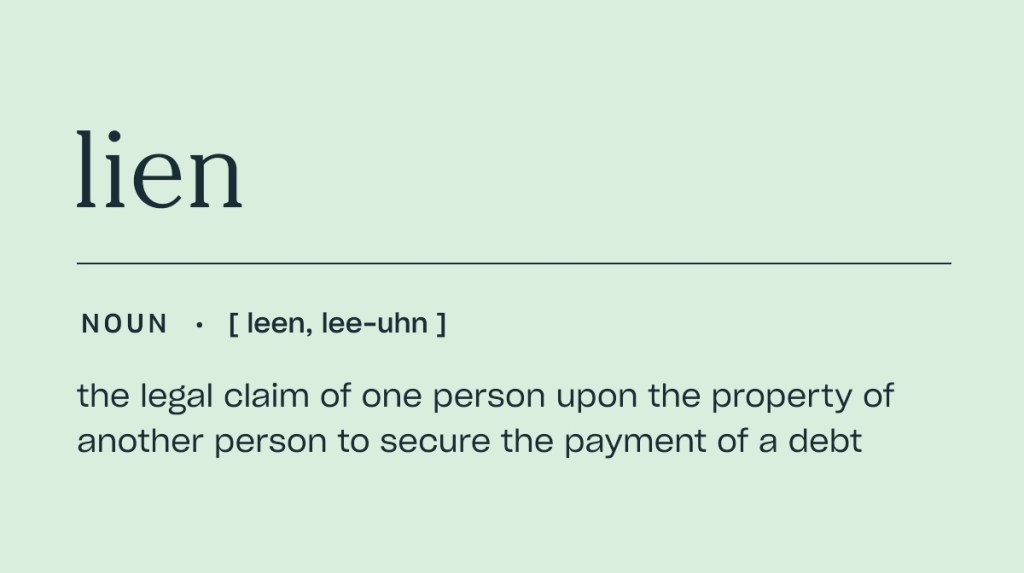
Lien.

Holding on to someone’s property until they pay their debt.

Lien is the legal word to describe a person’s right to hold on to the property of another to ensure payment. The right arises where for example, being a mechanic, a person brings his vehicle for repairs. You have the right to hold on to the vehicle whilst you wait for payment of the repairs you effected.

However, during the time you are exercising a lien over someone else’s property, you must not be using it.

A landlord has a right to hold on to the property of a tenant pending the payment of rental debts.

Professionals like lawyers, accountants, bankers, and engineers can hold onto the documents of a client who owes them. they have the right to hold on to the documents until the client pays his/her dues.

A lien is a way of securing debts that is recognized by the law. The only requirement is that you should keep the goods held in the same condition as you found them and surrender the goods upon the payment of the money owed.


The author of this snippet is Simon Flemming Mutandi, a lawyer who writes in his personal capacity. The purpose of these pieces is to share insights into the law. The language and content are simplified to give the reader a digest of complex legal issues. For more information contact 0783475020 or email simonflemming1@gmail.com.

Protecting your assets.

What is a trust?

A trust is a legal entity that has the status of a human adult in the eyes of the law. It is established when a person known as the Founder drafts a trust deed, registers it with the Deeds Office and transfers assets to the Trust for the benefit of a third party, known as the “beneficiary.” The person who manages the assets of the trust is called a trustee. He/she does not own those assets and can incur criminal liability if they abuse the assets under their care.

Here are the key components of a trust:

1. Founder/Donor: This is the person who creates the trust and transfers their own assets into it. The Founder defines the terms and conditions of the trust and determines who will be the beneficiaries.

2. Trustee: The trustee is responsible for managing and administering the assets held in the trust according to the instructions outlined by the Founder in the trust deed. The trustee has a legal obligation to act in the best interests of the beneficiaries and must adhere to the terms of the trust. Certain crimes arise out of an abuse of trust assets such as “theft of trust property” when a trustee converts trust assets or income for their personal benefit as opposed to remitting it for the benefit of the beneficiaries to the trust.

3. Beneficiary: The beneficiary is the person who will benefit from the assets held in the trust. The Founder can designate one or multiple beneficiaries and specify how and when the assets will be distributed to them. Beneficiaries can include individuals, organizations, charities, or even future generations.

4. Trust Property/Assets: These are the assets, such as money, real estate, investments, or personal belongings, that the Founder transfers into the trust. Once transferred, the assets become separate from the Founder’s personal assets and are held by the trustee on behalf of the beneficiaries.

To establish a trust, you have to engage a lawyer who is a Notary Public to draft the deed of transfer per your instructions and to register it so that it is recognized by the law. A trust can be a very good way to protect your assets and ensure that future generations benefit from your hard work.


The author of this snippet is Simon Flemming Mutandi, a lawyer who writes in his personal capacity. The purpose of these pieces is to share basic legal information with non-lawyers. For more information contact 0783475020 or email simonflemming1@gmail.com.

Design a site like this with WordPress.com
Get started